Garage Door Installation Cost 2026: What You'll Pay
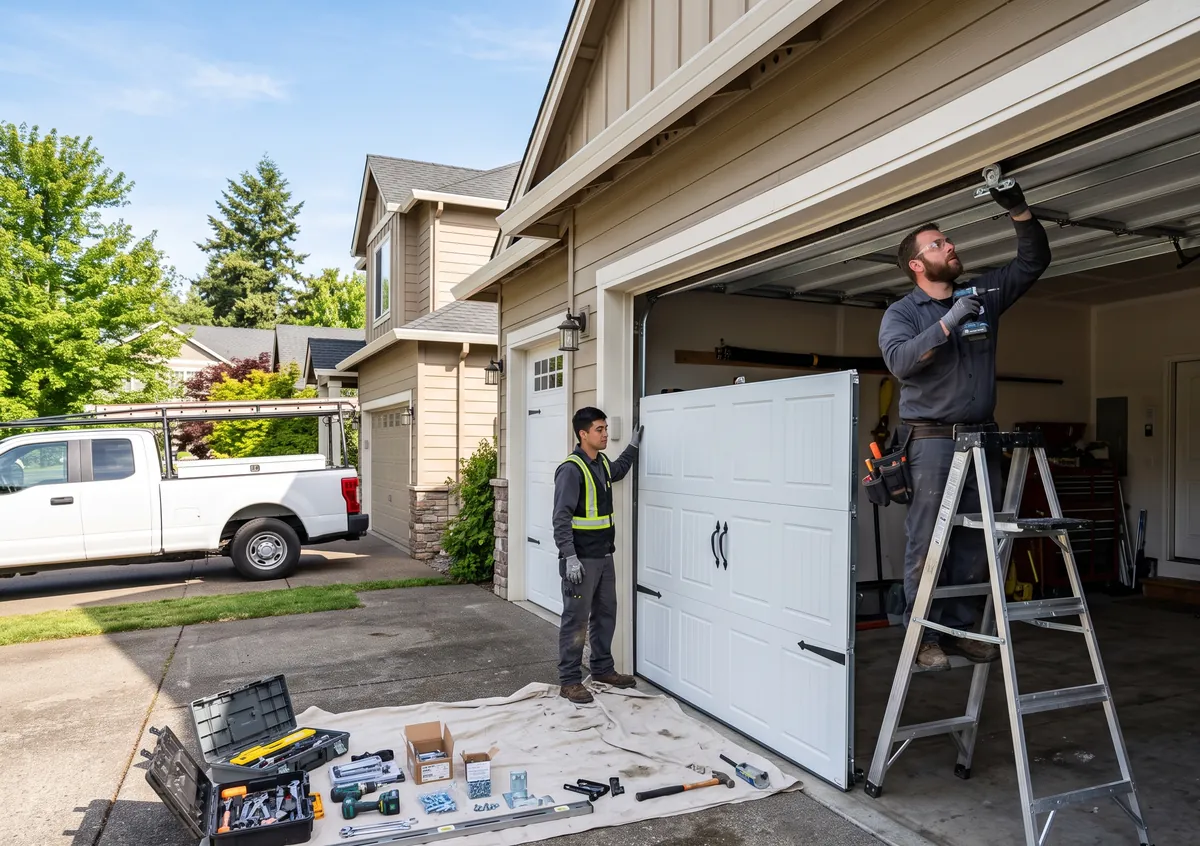
Garage door installation cost: in 2026 a new single garage door installed runs roughly 700 to 2,000 dollars, and a double door runs roughly 1,200 to 4,000 dollars, with material and insulation driving most of the spread. Bargain steel doors land at the bottom, wood and full-view glass at the top.
I have hung a lot of doors over 14 years, from builder-grade steel on rental flips to four-figure full-view glass on custom builds. The price you get quoted depends on a handful of real things, and once you understand them you will know whether a bid is fair or padded. Let me break down where the money actually goes.
What You're Paying For
A door install is three buckets: the door and hardware, the labor, and the extras like haul-away and a new opener if you need one. The door itself is usually the biggest line, but labor is not trivial because a door has to be balanced and squared or it will not last.
Cost by Material
Material is the single biggest factor. Here is what each one means in dollars and in real life.
| Material | Single door installed | Double door installed | My take |
|---|---|---|---|
| Basic steel (non-insulated) | 700 to 1,100 dollars | 1,200 to 1,800 dollars | Fine for a detached or unconditioned garage |
| Insulated steel | 900 to 1,600 dollars | 1,600 to 2,800 dollars | My most-recommended door |
| Wood or wood-composite | 1,500 to 3,500 dollars | 2,800 to 6,000 dollars | Beautiful, high upkeep |
| Full-view aluminum and glass | 2,000 to 4,500 dollars | 3,500 to 8,000+ dollars | Stunning, premium, and pricey |
Basic steel
Single-layer steel with no insulation. Light, cheap, and perfectly fine for a garage that is not attached to living space and not climate controlled. The downside is it dents easier, it is noisy, and it does nothing for temperature. For a shop or a detached garage where you are not heating the space, it is a reasonable buy.
Insulated steel (what I recommend most)
This is the sweet spot for the typical attached garage. Two or three layers of steel with foam in between. It is quieter, sturdier, dents less, and actually holds temperature, which matters a lot if the garage shares a wall with the house or you have a room above it. The cost bump over basic steel is modest and worth it for almost everyone with an attached garage.
Wood and wood-composite
Real wood looks fantastic and nothing else matches it on a craftsman or a high-end home. But it is heavy, it costs more, and it needs refinishing every few years or the weather eats it. Composite gives you a similar look with less upkeep. Buy wood because you want the look and you accept the maintenance, not because you think it is the practical choice.
Full-view glass and aluminum
Aluminum frame with glass or acrylic panels. Modern, gorgeous, very popular on contemporary homes and for turning a garage into a flex space. It is the most expensive and the heaviest, which means it needs a stronger opener and well-matched springs. Worth it if the look is the point. Overkill if you just want a door that works.
Insulation and R-Value, Explained Without the Fluff
R-value measures how well the door resists heat transfer. Higher is better insulation. You will see numbers from around R-6 on a basic insulated door up past R-18 on premium models.
Here is the honest version. If your garage is detached and unconditioned, R-value barely matters, so do not pay for it. If the garage is attached, especially with a bedroom or bonus room above it, insulation is one of the best dollars you can spend. It cuts noise, steadies the temperature in the rooms next door, and makes the whole door feel more solid. I would rather a customer buy a mid-tier insulated steel door than a top-tier non-insulated one for an attached garage.
A quick reality check: the door is only part of the envelope. If the weatherseal at the bottom and sides is shot, a high R-value door still leaks air. New bottom seal is cheap and makes a real difference:
Single vs Double and the Labor Side
A double door is not simply twice a single. It is wider, heavier, and needs heavier springs and sometimes a beefier opener, so the price climbs faster than the size alone suggests. Labor on a standard swap, removing the old door and hanging a new one on existing framing, usually runs 200 to 600 dollars depending on door size, region, and how cooperative the old hardware is. If the framing or the track has to be rebuilt, or the opening is being resized, that climbs.
Things that add to a bid, fairly:
- Haul-away and disposal of the old door, often 50 to 150 dollars.
- New tracks, rollers, hinges, and springs sized to the new door. Reusing old worn hardware is false economy.
- A new opener if the old one is dead or too weak for a heavier door. If you are pricing one, see my opener guide.
- Difficult access, low headroom, or non-standard sizes.
Hidden Costs People Forget to Ask About
The sticker price on the door is rarely the whole bill. A few things catch homeowners off guard, and a good installer will tell you about them up front instead of after.
- Permits. Some municipalities require a permit for a door replacement, especially in coastal or high-wind zones where the door has to meet a wind-load rating. That can add 50 to 200 dollars and a little paperwork. In hurricane regions a wind-rated door is not optional, and it costs more.
- Reinforcement for an opener. If you are adding an opener to a door that never had one, or hanging a heavier door, the top panel may need a strut or bracket reinforcement so the panel does not bend over time.
- Wiring and outlets. If there is no outlet near the ceiling for an opener, you may need an electrician. That is a separate trade and a separate bill.
- Disposal of an old wood or oversized door. Heavier and bulkier old doors sometimes cost more to haul.
I had a customer who got three quotes, took the lowest by 400 dollars, and only later found out that bid did not include a wind-rated door even though his county required one. The install got red-tagged at inspection and he paid twice. The cheapest number is not the cheapest job if it leaves something out. Make every bidder list what is included so you are comparing the same thing.
One more thing on the money side: be wary of any installer who wants a large cash deposit up front or pressures you to decide on the spot. A demand for full payment before the work starts is a classic red flag the government's guide to spotting scams and fraud warns about. A legitimate door company will give you an itemized written bid, not push you to wire money before a single bolt is hung.
Lead Time and Why It Matters
A stock steel door in a common size can often be installed within a week or two. A custom size, a wood door, or a full-view glass door is usually made to order and can take several weeks to a couple of months. If your door is broken and the garage is your only car access, ask about lead time before you fall in love with a custom door. Sometimes the right move is a stock insulated steel door you can get quickly rather than waiting six weeks for glass.
How Pros Actually Bid
When I quote a door, I am pricing the door and panels, the full hardware set, the labor to remove and install, haul-away, and whether your opener can handle the new door. A good bid is itemized so you can see those pieces. Watch for a few things:
- Get the R-value and the steel gauge in writing, not just "insulated."
- Make sure new springs and rollers are included, not reused. A new door on tired springs is a callback waiting to happen.
- Confirm haul-away is in the number or priced separately so it does not surprise you.
- Be cautious of a quote far below the others. The difference is usually thinner steel, cheaper hardware, or reused springs.
Where to Save and Where Not To
Save by skipping insulation on a detached garage, by choosing insulated steel over wood when you do not need the look, and by keeping a working opener if it can handle the door's weight. Do not save by reusing springs and rollers, by going non-insulated on an attached garage, or by hiring the cheapest bid without seeing what is in it.
A new door is also the right moment to fix the small stuff while everything is open: fresh weatherseal, good rollers, and a tube of proper lubricant for the first service. My maintenance guide covers how to keep a new door running quiet for years, and if a spring fails down the road, my spring replacement cost guide has the real numbers.
Frequently Asked Questions
How much does it cost to install a new garage door in 2026?
A new single garage door installed runs roughly 700 to 2,000 dollars, and a double door runs roughly 1,200 to 4,000 dollars. Material and insulation drive most of that spread, with bargain steel at the bottom and wood or full-view glass at the top. Labor on a standard swap is usually 200 to 600 dollars on top of the door itself.
What is the cheapest garage door material?
Basic single-layer steel with no insulation is the cheapest, landing around 700 to 1,100 dollars installed for a single door. It is light, dents easier, and does nothing for temperature, so it is a reasonable buy only for a detached or unconditioned garage. For an attached garage I would spend up for insulated steel instead.
Is an insulated garage door worth the extra cost?
For an attached garage, especially one with a room above it, yes. The cost bump over basic steel is modest, and insulation cuts noise, steadies the temperature in the rooms next door, and makes the door feel more solid. For a detached, unconditioned garage, R-value barely matters and I would not pay for it.
Why does a double garage door cost so much more than a single?
A double door is not simply twice a single. It is wider and heavier, so it needs heavier springs and sometimes a beefier opener, which makes the price climb faster than the size alone suggests. That extra hardware, not just the bigger panel, is what you are paying for.
What hidden costs come with a garage door installation?
The ones that catch homeowners off guard are permits in coastal or high-wind zones, opener reinforcement struts on heavier doors, electrical work if there is no outlet near the ceiling, and haul-away of the old door. These can each add 50 to 200 dollars. A good installer lists them up front instead of after the job.
How long does it take to get a new garage door installed?
A stock steel door in a common size can often be installed within a week or two. A custom size, a wood door, or a full-view glass door is usually made to order and can take several weeks to a couple of months. If your only car access is through the garage, ask about lead time before you fall in love with a custom door.
The Practical Bottom Line
For most attached garages, insulated steel at 900 to 1,600 dollars for a single or 1,600 to 2,800 for a double is the smart buy. Spend up for wood or glass only because you want the look and accept the upkeep. Insist on new springs and rollers in the bid, get the R-value in writing, and confirm haul-away. To find a vetted installer in your area instead of trusting a search ad, browse the pros directory, and installers can get listed to show up there.